 The Money Pages
The $24 Scooter
Evie finds a used scooter. Is the lower price the whole story?
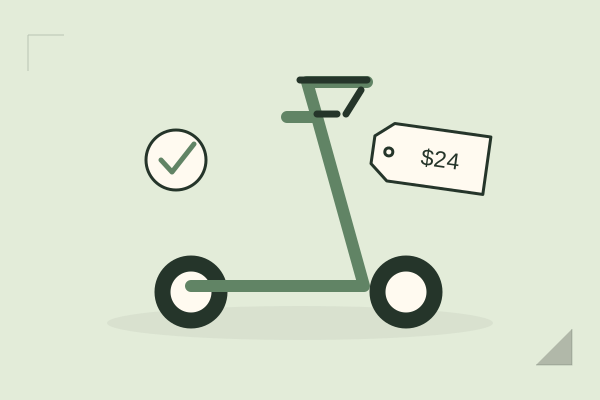
“This one has a racing stripe,” Evie said.
“It has a scratch,” her uncle said.
“A racing scratch.”
The used scooter cost $24. A new one cost $36. Evie had saved $18.
Check the scooter, not just the price
Secondhand means someone owned an item before you. A lower price could help Evie reach her goal sooner. But the scooter still had to work safely.
Her uncle checked its frame, wheels, and brake. They asked the seller questions and tried it with permission in a safe place.
The scratch was just a mark. The important parts worked.
If the brake had been broken, the low price alone wouldn't have made it a good choice.
Two ways to reach the goal
Evie needed $24 − $18 = $6 more for the used scooter.
She would need $36 − $18 = $18 more for the new one.
She could keep saving for either. She didn't have to decide just because someone said the used one might sell soon.
Evie chose to save toward the used one. After another small job arranged by her uncle, she had the extra $6. They checked that the scooter was still available before making plans to buy it.
“What about the scratch?” her friend asked later.
“It came with a story,” Evie said.
Buying used wasn't the right answer for every item. This time, it met her need and fit her goal.
Money words
Secondhand
Owned by someone else before you.
A used item may help you spend less. Check its condition and whether it does the job, not just its price.
Your turn
What would you check before choosing a used item?